// NAVIGATION MATRIXSYSTEM ACTIVE
ELTHUS ENTERPRISEGLOBAL 99.99% SLA
How much does a website cost in 2026? What drives the price for each type of website, what should be included, hidden running costs, how a professional web development process works, and the questions to ask any web development company before you hire.

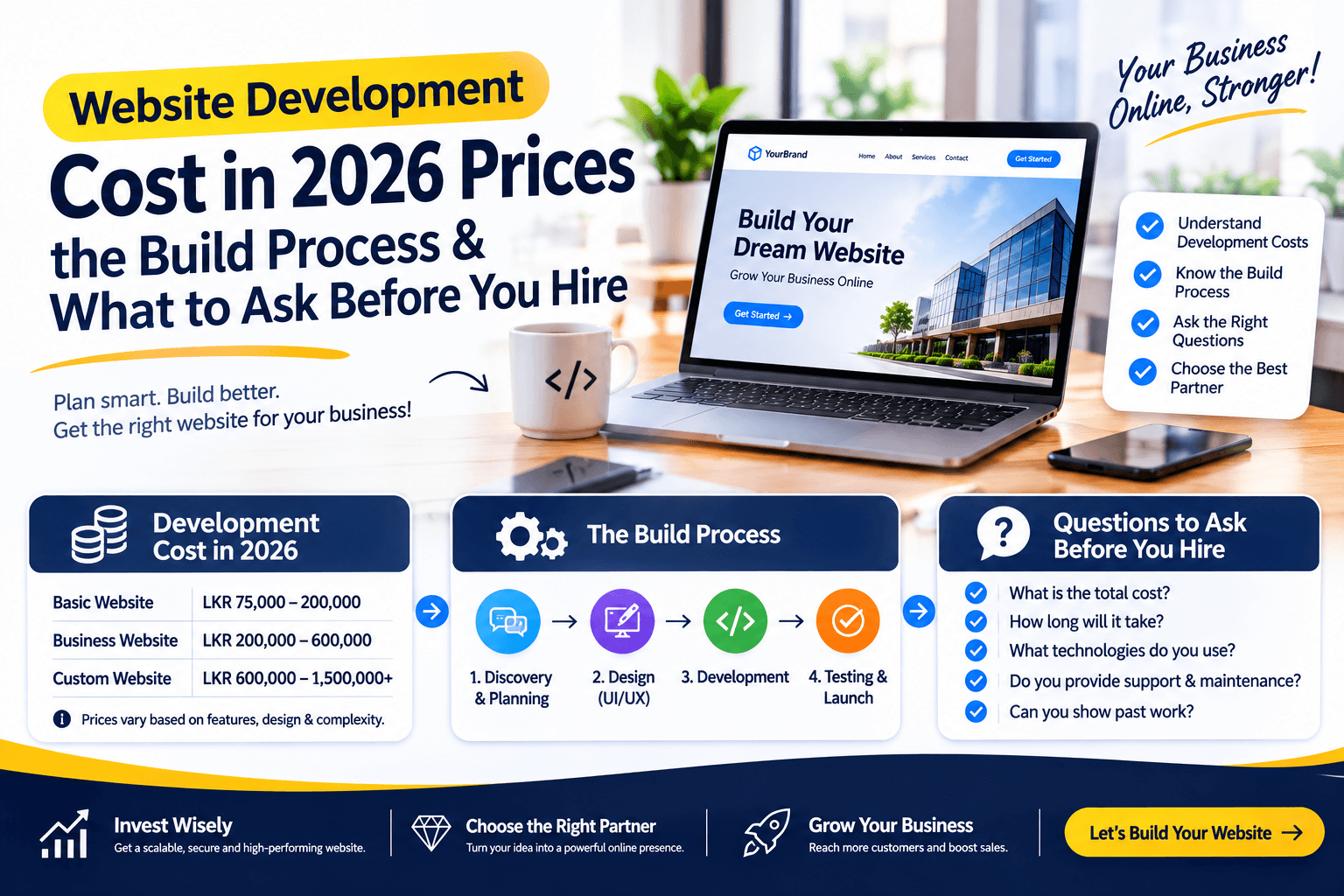
Website development prices depend on what the website must do, not on the number of pages alone. Template-based business websites sit at the low end, professional custom-designed company websites in the middle, and e-commerce stores, booking systems and custom web applications at the top.
The top tier costs more because it needs integrations, user accounts, payments and admin dashboards. As one market example, Sri Lankan agencies' published 2026 ranges run from about LKR 35,000 to 100,000 for basic sites to LKR 90,000 to 180,000 for custom-designed ones. Wherever you are, treat any price list as a starting point and compare written quotes against the same scope.
A professional website package should state the number of pages, custom design versus template, mobile responsiveness, contact forms, basic on-page SEO, analytics, Google Business Profile setup and training for updating content.
Running costs are often left out of cheap packages: domain renewal, hosting, SSL, email, security updates, backups and content changes. Ask for these as a separate yearly figure so you can compare offers fairly.
Make sure the domain is registered in your business name and that you receive admin access and the source code or full export. Many businesses lose their website when they change providers.
Company and service websites present your services, build trust and generate enquiries. E-commerce websites sell products online with payments and delivery. Hotel and tourism websites need direct booking, availability, multi-currency prices and fast loading for overseas visitors on mobile.
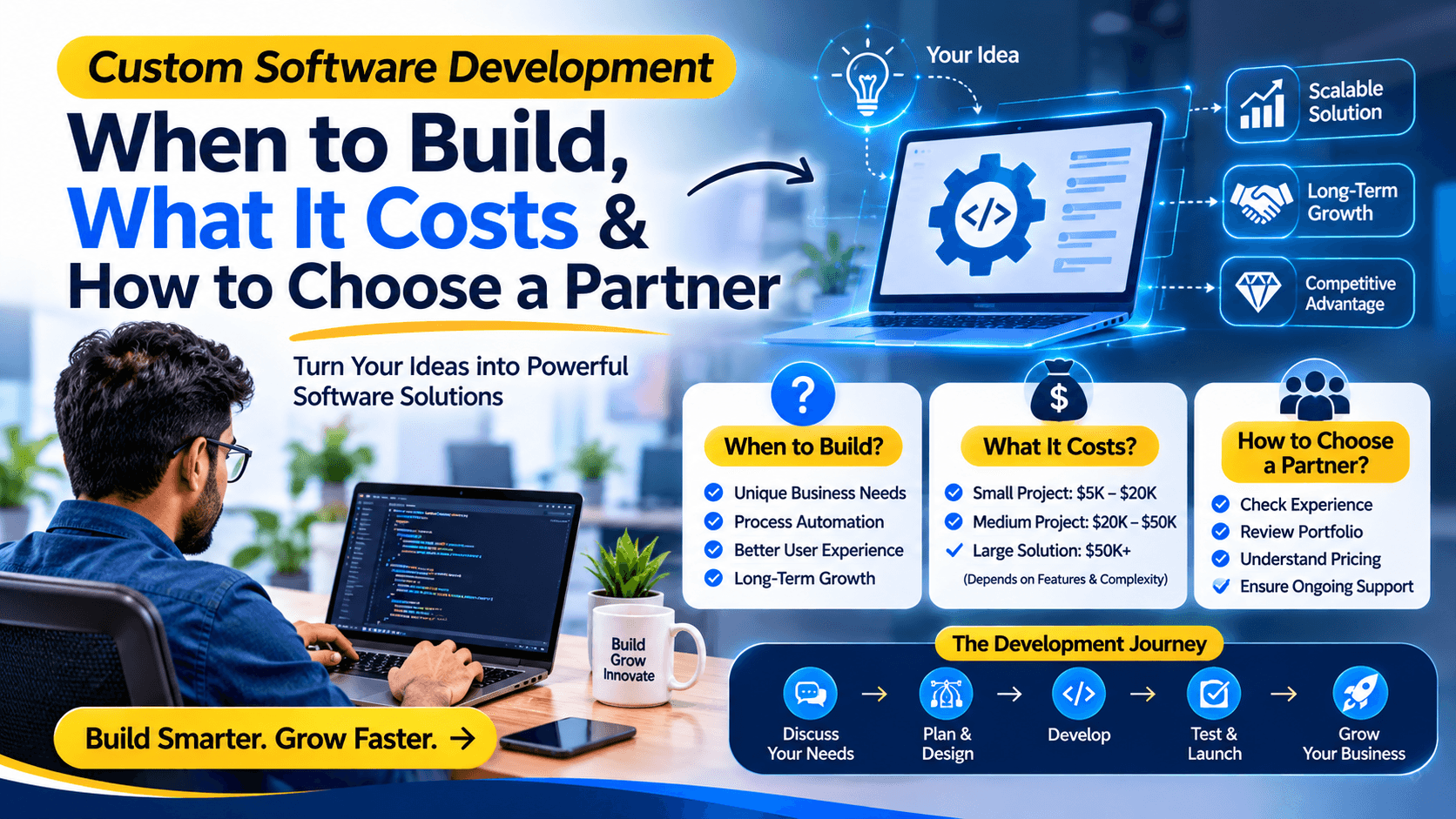
Web applications and portals go further: customer portals, dashboards, booking engines and internal tools that replace spreadsheets. These are closer to software development than web design, and should be scoped that way.
A reliable web development company follows a clear process: discovery (goals, audience, competitors and keywords), sitemap and content plan, design mock-ups for review, development, SEO and performance setup, testing on real phones, launch, and ongoing care.
Skipping discovery and content planning is the most common reason new websites look good but bring no enquiries. The structure of your service pages should match what customers actually search for.
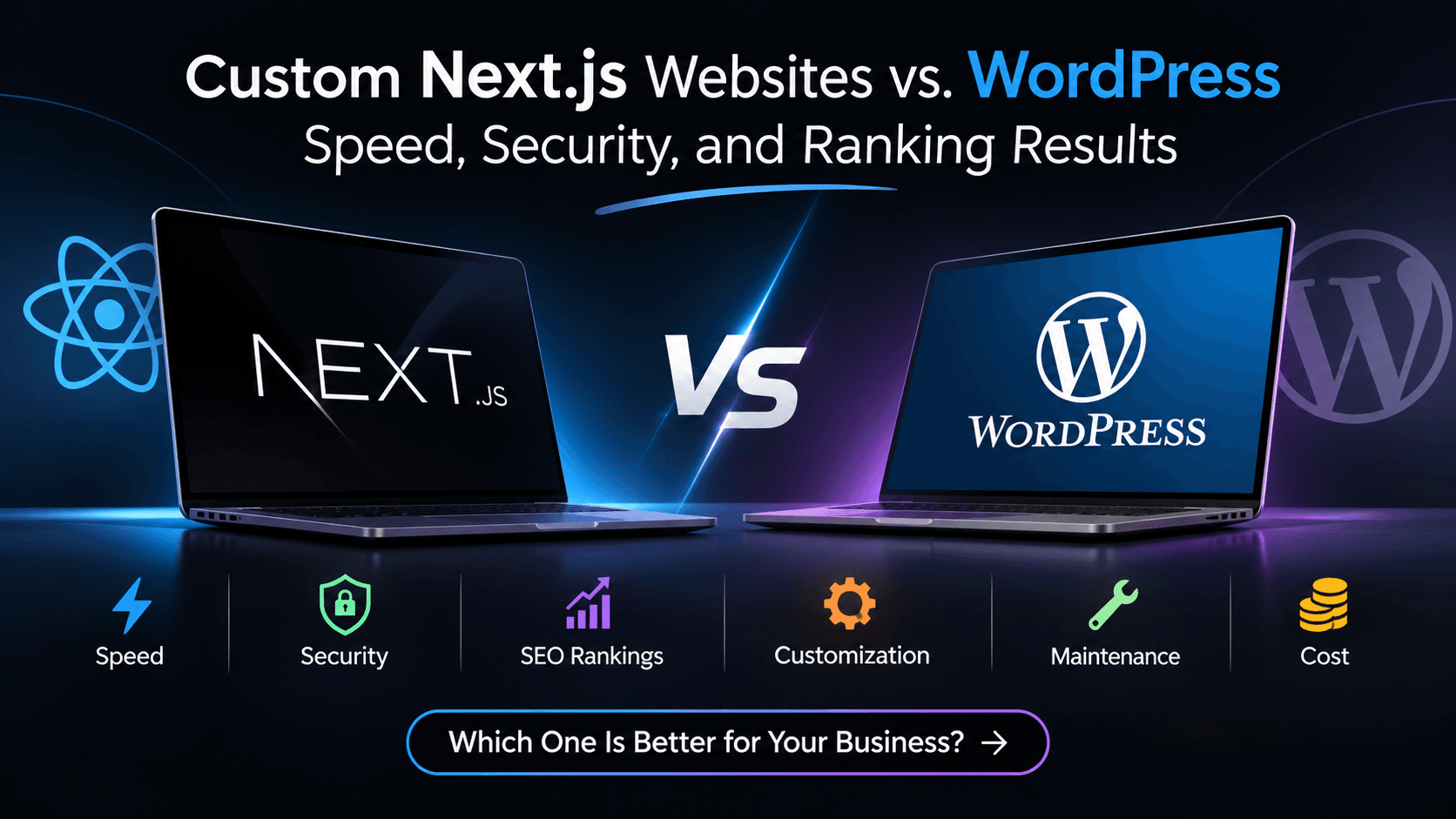
Templates and website builders are the cheapest and fastest option for very small sites. WordPress offers flexibility and many plugins, but needs regular updates and careful hosting to stay fast and secure.
A custom-built website, for example with Next.js, delivers excellent speed and Core Web Vitals, strong security with fewer moving parts, and clean integration with your booking, payment, POS or CRM systems. It is the better long-term choice when the website is central to how you sell.
Can I see live websites you built and talk to those clients? Who will write the content? What exactly is included in the price, and what are the yearly costs? Will the site be mobile-first and pass Core Web Vitals? What SEO setup is included? Who owns the domain, hosting account and code? What happens if something breaks after launch?
Clear, specific answers in writing are a better sign of quality than the lowest price.
It depends on scope. Template-based business websites are the most affordable, custom-designed company websites cost more, and e-commerce stores or custom web applications cost the most because of integrations, payments and admin features. Compare written quotes that list exactly what is included.
A small business website usually takes two to four weeks once content is ready. E-commerce and custom web applications typically take six to twelve weeks or more, depending on scope and integrations.
You should. Agree in writing that the domain is registered in your business name and that you receive full admin access and the source code or a complete export when the project is paid.
A country domain (such as .co.uk, .com.au or .lk) signals a local business and can build trust with local customers, while a .com suits international audiences. Many businesses register both and redirect one to the other.
Only if SEO is part of the build: fast mobile pages, one clear page per service, descriptive titles and headings, structured data, an XML sitemap and Google Search Console setup. Ask for these in the written scope.
Custom-coded Next.js websites, company sites and web portals built for speed, enquiries, SEO, AEO and GEO.

Speak with our team about custom websites, SEO and AI search setup, payment gateway integration, or business software.